Keynote Speakers
Keynote Speakers
| Keynote Speaker Ⅰ | ||
 |
||
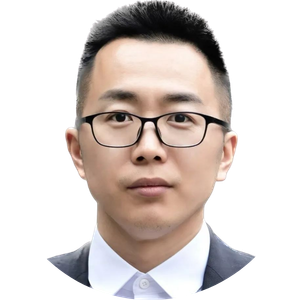
| Shunli Wang | ||
| Inner Mongolia University of Technology, China | ||
| Brief Introduction: Shunli Wang is a Professor, Doctoral Supervisor at Sichuan University, Academic Dean at Inner Mongolia University of Technology, Executive Vice President at Smart Energy Storage Institute, Fellow of the Royal Society of Arts and Crafts (RSA Fellow), Fellow of the Institute of Engineering and Technology (IET Fellow), IEEE Senior Member, PCIM Asia Committee Member, IEEE PES Committee Member, Top 2% Worldwide Scientist, Global Highly Cited Researcher. Focusing on the major national strategic needs of new energy and energy storage systems, the research of green and low-carbon energy storage is conducted in smart grids, undertaken 56 projects such as the National Natural Science Foundation and National Key Research & Development, with a Research Interest Score value of 14995, and 258 articles published on SCI-indexed famous journals with 53 articles in the First Area / TOP journals in Chinese Academy of Sciences, 42 high-cited ones, 23 international and domestic invention patents, 20 software Copyrights and standard formulation and 9 books have been published by first-class international and domestic publishing houses. 10 awards at or above the provincial or ministerial level have been achieved, including 3 international gold medals. 17 chairmanships of international conferences have been participated in, with 5 editorial boards of international periodicals. The core technical achievements have reached an international advanced level and have been reported by the People's Daily. | ||
| Speech Title: Multi-physics Composite Modeling and Intelligent Safety Control Technology for Energy Storage in New Power Systems | ||
| Abstract: Against the backdrop of global energy transition and the accelerated development of new power systems, large-scale energy storage has become a key technological infrastructure for supporting high-penetration renewable energy integration and ensuring the safe and stable operation of power systems. As a critical flexible regulation resource in the coordinated source-grid-load-storage framework, the accuracy of energy storage modeling and the effectiveness of safety management directly determine the operational reliability and regulation efficiency of power systems. Focusing on the complex characteristics of 100 MW-level large-scale energy storage stations, including multi-string parallel operation and multi-level coupling, this presentation systematically investigates mechanical, electrical, and material multi-physics coupled modeling methods. A multi-feature-based characterization method for internal battery properties is proposed, effectively addressing the limitations of traditional electrical models in accurately describing nonlinear dynamic battery responses. Furthermore, an online estimation framework for key battery state parameters based on multidimensional information fusion is developed, overcoming the bottleneck of coordinated prediction of multi-timescale state parameters. This enables real-time perception and intelligent early warning of safety states throughout the full lifecycle of energy storage systems. The research outcomes significantly enhance the intelligent management capability and operational safety of large-scale energy storage stations, providing theoretical support and engineering solutions for the large-scale and industrial application of energy storage technologies in new power systems. | ||
| Keynote Speaker Ⅱ | ||
 |
||
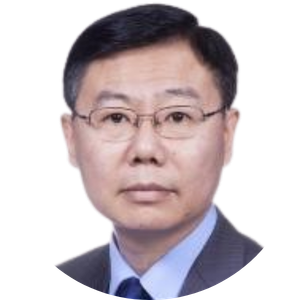
| Pei Zhang | ||
| Tianjin University, China | ||
| Brief Introduction: Pei Zhang is a Professor at Tianjin University. He was Vice Dean of International School of Renewable Energy at Beijing Jiaotong University. He was the Director of Smart Grid in Resource Group of Accenture and the Program Manager leading Grid Operation and Planning group at Electric Power Research Institute (EPRI) in USA. He obtained his Ph. D. degree from Imperial College, United Kingdom. His research interests include power system operation and planning, power market and application of AI into power system. He is an IEEE Fellow for his contributions to the computational methods of smart control centres and probability-based planning and operation. He was awarded the Fellow of Asia-Pacific Artificial Intelligence Association for his contribution to application of artificial intelligence into power system. He was elected as Chinese Society of Electrical Engineering Fellow in 2024. He was ranked as the world's top 2% of scientists for Lifetime Scientific Influence. | ||
| Speech Title: Power System Intelligent Computing | ||
| Abstract: Current computational methodologies for power systems primarily rely on two scientific paradigms: the Newtonian paradigm and the Keplerian paradigm. The Newtonian paradigm models power system components based on their physical characteristics and employs numerical methods for problem-solving. The Keplerian paradigm, on the other hand, is data-driven, using statistical analysis of large datasets to uncover patterns and insights. For ultra-large-scale and complex power systems, the Newtonian paradigm faces challenges in precise modeling, high computational demands, and an inability to meet the real-time requirements of system operation. Conversely, the Keplerian paradigm suffers from issues related to interpretability and generalization. The concept of intelligent computation for power systems is proposed, which integrates artificial intelligence technologies with a hybrid framework combining the Newtonian and Keplerian paradigms. This integrated approach addresses challenges related to computational scale and timeliness. Furthermore, the paper outlines a research framework for power flow analysis, time-domain simulation, and optimal power flow computation based on this paradigm fusion. The aim is to provide a fresh perspective on computational challenges in power systems and to offer innovative solutions to scientific problems in the energy and power fields. | ||
| Keynote Speaker Ⅲ | ||
 |
||
| Amjad Anvari-Moghaddam | ||
| Aalborg University, Denmark | ||
| Brief Introduction: Amjad Anvari-Moghaddam is a Full Professor and Leader of the Intelligent Energy Systems and Flexible Markets (iGRIDS) Research Programme at the Department of Energy (AAU Energy), Aalborg University, where he also coordinates the Integrated Energy Systems Laboratory (IES-Lab). His research focuses on the control, and operation of microgrids, renewable and hybrid power systems, integrated energy systems, and electricity market design. He serves as an Alternate Member of the Council for Energy Efficient Transition at the Danish Ministry of Climate, Energy and Utilities, a member of the Horizon Europe Reference Group 5 (Climate, Energy and Mobility) at the Danish Agency for Higher Education and Science (UFS), an Expert Group Member of the AAU Water & Energy Platforms, and Chair of the IEEE Denmark Section. Prof. Anvari-Moghaddam has authored more than 300 scientific publications, including 11 books and 23 book chapters. He is the Editor-in-Chief of ACADEMIA Green Energy and serves as an Associate Editor for several leading international journals. He is also a member of IEC SC 8B Working Groups (WG3 and WG6) and contributes to several IEEE PES, IEEE IES, IEEE PELS, and CIGRE working groups. | ||
| Speech Title: Many Hands, One Grid: Coordinating the Energy Transition | ||
|
Abstract: Most projections of energy demand and supply through 2050 point to significant new system challenges as low-carbon generation expands and peak demand rises, driven largely by the electrification of transport and heating. At the same time, the energy landscape is changing rapidly, with far-reaching implications for the global energy industry and its stakeholders. |
||
| Keynote Speaker Ⅳ | ||
 |
||
| Guoqiang Zhang | ||
| Harbin Institute of Technology, China | ||
| Brief Introduction: Guoqiang Zhang (Senior Member, IEEE) is currently a Professor and a Ph.D. Supervisor with Harbin Institute of Technology. He is a recipient of the Delta Young Scholar Award. His research interests include AC motor drive control, sensorless control, efficiency optimization, and electrolytic capacitorless drive control. He has authored or coauthored over 100 high-level academic papers, holds more than 30 authorized invention patents, and has published four English books with Springer. He has served as the Principal Investigator for numerous projects, including the National Natural Science Foundation of China (NSFC) (e.g., Excellent Young Scientists Fund and two General Programs), the National Science and Technology Major Project, the Aeronautical Science Foundation of China, the Delta Power Electronics Science and Education Development Program, and various enterprise collaboration projects. Dr. Zhang has received three provincial and ministerial-level science and technology awards, including the First Prize of the Heilongjiang Provincial Natural Science Award and Technological Invention Award, and the Second Prize of the Technological Invention Award from the Ministry of Education. As the first contributor, he won the Second Prize of the Sci-Tech Progress Award from the China Electrotechnical Society (CES) and the China Power Supply Society. He is the recipient of the inaugural CES Young Scientist Award, the IEEE TRANSACTIONS ON TRANSPORTATION ELECTRIFICATION First and Second Prize Paper Awards, the CAST Excellent Sci-Tech Paper Award, the IEEE IES EMTC Prize Paper Award, and Best Paper Awards at ICEMS (2019, 2022, 2023) and SLED (2023, 2025). He serves as an Associate Editor for the IEEE TRANSACTIONS ON ENERGY CONVERSION and Deputy Director of the Heilongjiang Key Laboratory of Sustainable Energy Conversion and Control Technology. He is a Committee Member of CES, the Chinese Association of Automation (CAA), and the PCIM Asia Conference Technical Committee, and is an active reviewer for multiple IEEE TRANSACTIONS. |
||
| Speech Title: Advanced Drive and Control Technologies for PMSMs in New Energy Vehicles: Challenges and Solutions | ||
| Abstract: Driven by carbon neutrality, New Energy Vehicles (NEVs) demand high-performance electric propulsion systems. Permanent Magnet Synchronous Motors (PMSMs) are mainstream traction solutions, yet face complex challenges in integration, speed, reliability, efficiency, and comfort. This presentation reviews modern trends and highlights key control advancements, including full-speed-range sensorless drive, online/offline parameter identification with self-tuning, non-invasive health monitoring, deep field-weakening with harmonic suppression, and efficiency optimization. Engineering applications across traction drives, auxiliary power units, automotive HVAC compressors, and ultra-high-speed (120,000 rpm) fuel-cell boost pumps are demonstrated, concluding with future outlooks for intelligent motor drives. | ||