Speakers 2025
Speakers 2025
Keynote Speaker I
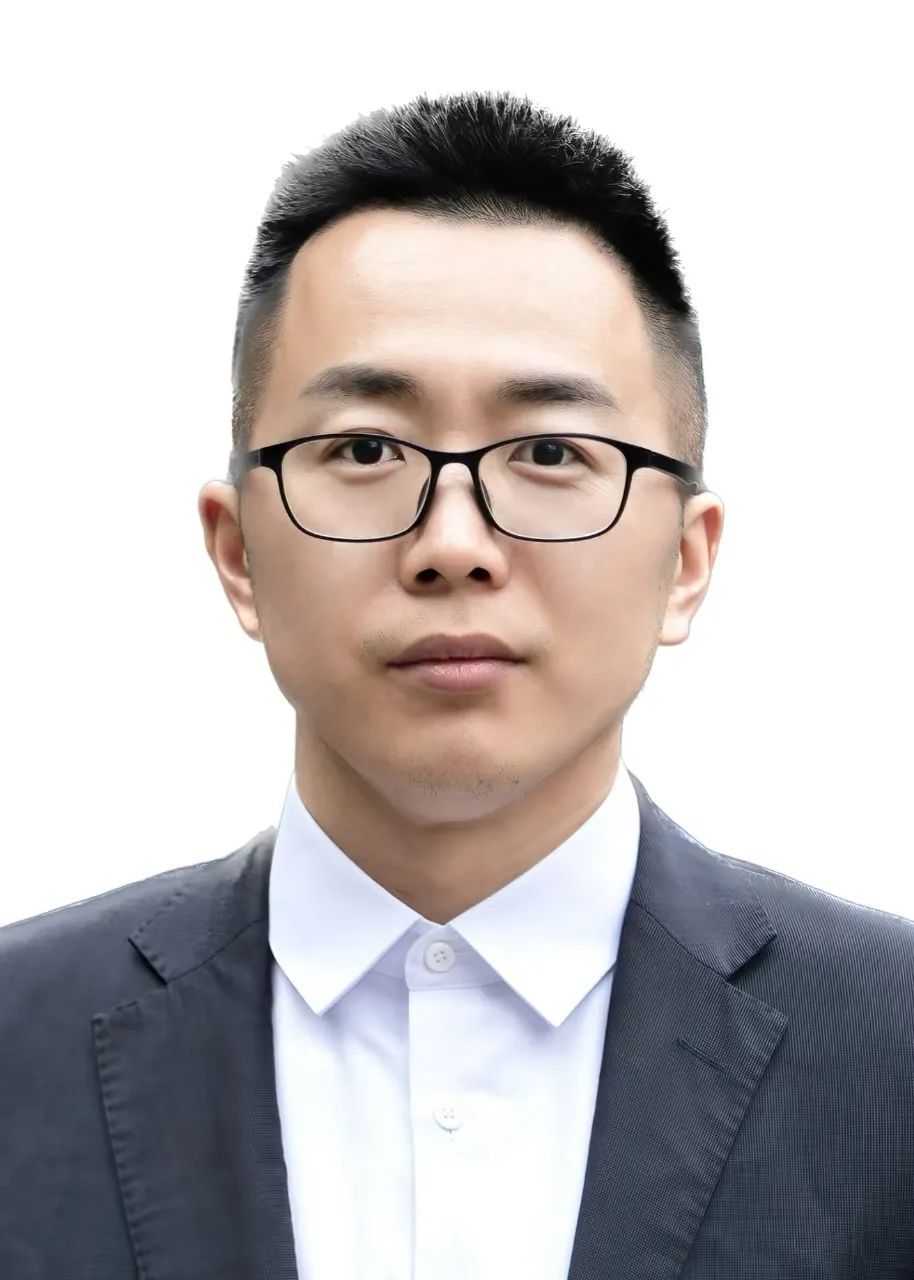
Prof. Shunli Wang
Inner Mongolia University of Technology, China
Biography Sketch: Shunli Wang is a Professor, Doctoral Supervisor, Academic Dean of Electric Power College in Inner Mongolia University of Technology, Executive Vice President of Smart Energy Storage Institute, Deputy General Manager of Daqingshan Laboratory in Inner Mongolia Electric Power Group, Academician of the Russian Academy of Natural Sciences, RSA Fellow, IET Fellow, IEEE Senior Member, PCIM Asia Committee Member, IEEE PES Committee Member, Academic Leader of National Electrical Safety and Quality Testing Center, Tianfu Qingcheng Scientific and Technological Talent, High-level Overseas Talent, Tianfu A Talents, Academic & Technical Leader of Chinese Science and Technology City, and Top 2% Worldwide Scientist. Focusing on the national strategic needs of new energy and energy storage systems, the research of green and low-carbon energy storage is conducted in smart grids, undertaken 56 projects such as the National Natural Science Foundation and National Key Research, with a Research Interest Score value of 14995, and 258 articles published on SCI-indexed famous journals with 52 articles in the First Area / TOP journals in Chinese Academy of Sciences, 42 high-cited ones, 67 authorized Intellectual property rights such as international and domestic invention patents, software Copyrights and standard formulation and 9 books have been published by first-class international and domestic publishing houses. 9 awards at or above the provincial or ministerial level have been achieved, including 3 international gold medals. The core technical achievements have reached an international advanced level and have been reported by the People's Daily.
Speech Title: Energy Storage State Estimation with Industrial Application in Power Stations
Abstract: As an important component of the smart grid energy storage system, high-precision state estimation of lithium-ion batteries is crucial for ensuring the power quality and supply capacity of the smart grid. To achieve this goal, improved integrated smart algorithms are proposed to estimate the state of Lithium-ion batteries. Kernel function parameters are used to simulate the update of particle position and speed, and a genetic algorithm is introduced to select, cross, and mutate particles. The improved particle swarm optimization is used to optimize the extreme value to improve prediction accuracy and model stability. The cycle data of different specifications are processed to construct the traditional high-dimensional health feature dataset and the low-dimensional fusion feature dataset, and each version of the constructed network is trained and tested separately. The results of the multi-indicator comparison show that the proposed algorithms can track the true value stably and accurately with satisfactory high accuracy and strong robustness, providing guarantees for the efficient and stable operation of the smart grid.
In response to the nationally significant strategic demand for new energy and energy storage systems, a multi-feature composite modeling mechanism for ultra-low temperature battery systems is innovatively constructed. 1) constructing an electro-thermal-electrochemical multi-feature compound optimization model to solve the problem of accurate characterization of the internal characteristics of the battery; 2) A new online estimation algorithm based on multi-dimensional information fusion is proposed, which breaks through the bottleneck of collaborative estimation of multi-time scale state parameters and significantly improves the reliability of battery system safety monitoring; 3) Double amplification and isolation and multiple EMC protection mechanisms are formed to overcome the problem of energy storage from device level to system level, and serve the serialized military and civilian system equipment. Based on the deep integration of Industry-University-Research to form a new technical system of condition monitoring and control system architecture, realizing the development and industrial application of more than 30 varieties of battery monitoring and control equipment in 6 series, and presided over 3 results appraisal and 4 release standards. Relevant research results have been applied in numerous units, and a significant number of high-level talents have been trained to drive the development of upstream and downstream industrial chains in the energy storage sector.
Keynote Speaker Ⅱ
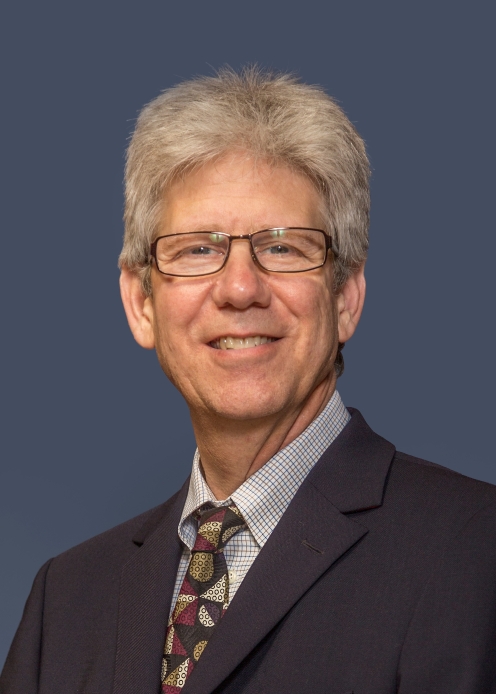
Prof. Marc A. Rosen
Ontario Tech University, Canada
Biography Sketch: Dr. Marc A. Rosen is a Professor of Mechanical and Manufacturing Engineering at Ontario Tech University (formally University of Ontario Institute of Technology) in Oshawa, Canada, where he served as founding Dean of the Faculty of Engineering and Applied Science. Dr. Rosen served as President of the Engineering Institute of Canada and of the Canadian Society for Mechanical Engineering. He has acted in many capacities, including founding Editor-in-Chief of the journal Sustainability and a Board member of Oshawa Power.
With over 70 research grants and contracts and 900 technical publications, including numerous books, Dr. Rosen is an active teacher and researcher in thermodynamics, sustainable energy, and environmental impact. Much of his research has been carried out for industry. Dr. Rosen has worked for such organizations as Imatra Power Company in Finland, Argonne National Laboratory, the Institute for Hydrogen Systems near Toronto, and Toronto Metropolitan University, where he served as Chair of the Department of Mechanical, Aerospace and Industrial Engineering.
Dr. Rosen has received numerous awards and honours, and is a Fellow of the Royal Society of Canada, the Engineering Institute of Canada, the Canadian Academy of Engineering, the Canadian Society for Mechanical Engineering, and the American Society of Mechanical Engineers.
Speech Title: Energy Sustainability: General Considerations and Examples
Abstract: Sustainable development is a critical, central and important goal and means for human and societal activity. Energy sustainability is of great importance to any activities and plans for overall sustainable development, and the achievement of sustainability. This is particularly important given 1) the pervasiveness of energy use throughout almost all aspects of societies and the lives of people, 2) the importance of energy in economic development of societies and the living standards attained by people, and 3) the significant impacts that energy processes and systems have on the environment and the ecosystems within them.
Many factors that need to be considered and appropriately addressed in moving or shifting towards energy sustainability are examined in this talk. These include appropriate selection of energy resources bearing in mind sustainability criteria, facilitation of the use of sustainable energy resources particularly through the use of appropriate energy carriers, enhancement of the efficiency of energy-related processes, and a holistic adoption of environmental stewardship in energy activities.
In addition, other key sustainability measures are addressed, such as economics, equity, land use, lifestyle, sociopolitical factors and population, and illustrative examples related to energy sustainability are considered.
Conclusions are provided related both on options for energy sustainability and on means to achieve sustainable development and overall sustainability.
Keynote Speaker Ⅲ
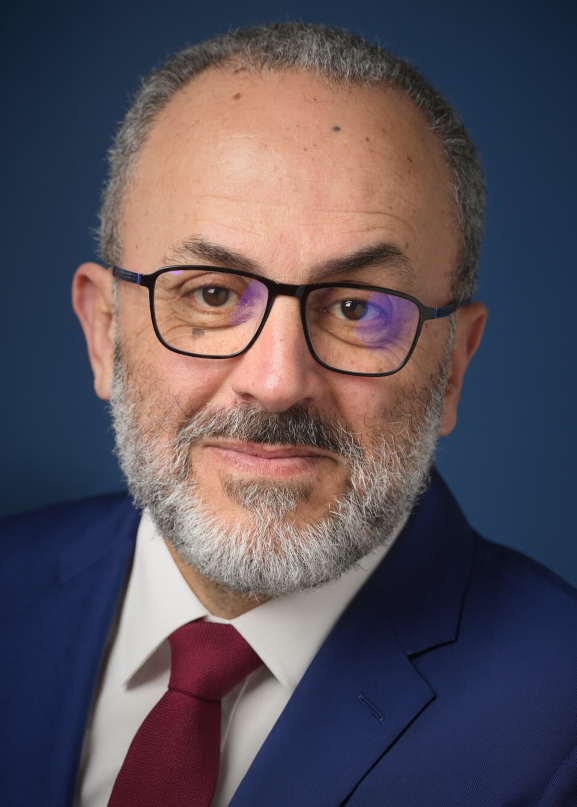
Prof. Mohamed Benbouzid
IEEE Fellow
University of Brest, France
Biography Sketch: Mohamed Benbouzid completed his Ph.D. in electrical at the National Polytechnic Institute of Grenoble, Grenoble, France, in 1994. He further earned his Habilitation à Diriger des Recherches degree from the University of Amiens, Amiens, France, in 2000.
Following the completion of his Ph.D., Dr. Benbouzid joined the University of Amiens, where he held the position of Associate Professor in electrical engineering. Since September 2004, he has been affiliated with the University of Brest, Brest, France, where he currently serves as a Full Professor in electrical engineering.
Prof. Benbouzid primary research interests and expertise include control of electric machines, variable-speed drives for traction, propulsion, and renewable energy applications, and fault diagnosis of electric machines.
Prof. Benbouzid is an IEEE Fellow and a Fellow of the IET. He is the Editor-in-Chief of the Applied Sciences (MDPI) Section on Electrical, Electronics and Communications Engineering. He is a Deputy Editor for the IET Renewable Power Generation.
Speech Title: Intelligent Biofouling Management: Unlocking Efficiency in Tidal Stream Turbines through Machine Learning
Abstract: This keynote will present a comprehensive machine learning-driven roadmap for the future of biofouling detection and estimation in tidal stream turbines. The talk will begin with an introduction to the phenomenon of biofouling in marine environments and its detrimental effects on turbine performance, hydrodynamic efficiency, structural integrity, and long-term maintenance costs. It will then provide a critical overview of existing detection and estimation approaches, identifying their respective strengths, technical limitations, and practical deployment challenges in highly dynamic underwater conditions. Building on this foundation, the keynote will examine recent scientific and technological advances, particularly those using data-driven models, remote sensing strategies, and hybrid physics–AI frameworks. The discussion will emphasize how machine learning can enhance early-stage fouling detection, improve estimation accuracy under incomplete or noisy datasets, and support predictive maintenance strategies. Finally, the presentation will consider emerging research directions and opportunities for innovation, outlining the key enablers needed to transition from concept to real-world implementation. By charting this trajectory, the keynote aims to highlight how intelligent monitoring and decision-support tools can ultimately enable more efficient, resilient, and sustainable biofouling management practices across the marine renewable energy sector.
Keynote Speaker Ⅳ
Prof. Jianfei Chen
Wuhan University, China
Biography Sketch: Jianfei Chen (Member, IEEE) received the B.S. degree in electronic information, science, and technology from Chongqing Normal University, Chongqing, China, in 2011, and the Ph.D. degree in electrical engineering from Chongqing University, Chongqing, China, in 2016. From 2015 to 2016, he was a visiting Ph.D. student with the Department of Energy Technology, Aalborg University, Aalborg, Denmark. From 2016 to 2019, he was a Postdoctoral Researcher with Wayne State University, Detroit, MI, USA. From 2019 to 2021, he was a Postdoctoral Associate with the University of Maryland, College Park, MD, USA. Since 2022, he has been with the School of Electrical Engineering and Automation, Wuhan University, Wuhan, China, and became a Full Professor in 2022. His current research interests include multilevel converter, magnetic integration, power module packaging design, hybrid switched-capacitor converter, wide bandgap devices based power converters for electric vehicles, and renewable generation.
Speech Title: Study on Four-level Converters
Abstract: This report introduces the research and application status of multilevel converters, and proposes the viewpoint that "a four-level converter = a two-level converter + a three-level converter". The topology and voltage balancing modulation methods of four-level converters are explained, and the engineering design challenges are discussed. Finally, The presenter presents the design progress of half-bridge power modules of four-level converters with parallel multi-chip configurations and looks ahead to the application prospects of the four-level converters.